News
Hans Gersbach, why is Switzerland so vulnerable when it comes to trade with the US and what can it do about it?

The US has unilaterally imposed tariffs on Switzerland in 2025, under which local businesses are suffering. Hans Gersbach explains why Washington has the upper hand in trade policy and what Bern can do about it in 2026.
Electrons lag behind the nucleus

Researchers at ETH Zurich have shown, for the first time with very high time and spatial resolution, that electrons in certain two-dimensional materials only follow the motion of the atomic nuclei with a delay. This insight could lead to the development of novel electronic devices in the future.
Longest observation of an active solar region

In May 2024, the strongest solar storm in twenty years raged. An international team led by ETH Zurich observed it. Their findings are now helping to improve space weather forecasts.
In memoriam: Konrad Osterwalder, former Rector and Interim President

Konrad Osterwalder was Rector of ETH Zurich from 1995 to 2006, and also served as Interim President during a difficult period. He played a central role in making ETH Zurich an open, international and innovative university and was a gifted teacher and mentor. He sadly passed away on 19 December at the age of 83.
A molecular gatekeeper that controls protein synthesis

For years, ETH researchers have been investigating a molecular complex that plays a key role in protein synthesis. They have now discovered that this complex also contributes a crucial function in ensuring that our DNA is properly processed and “packaged”.
Daniela Zetti, how will 2025 go down in history?

The Head of the Archives of Contemporary History at ETH Zurich contemplates how events become “historic” and reaches some surprising conclusions about 2025.
Looking back at ETH Zurich’s 2025

Engineers, biomedical researchers, computer scientists, and many other members of the ETH Zurich community have made great strides in research and teaching. Here is a brief review of an eventful year.
“Quantum technology will be part of our everyday lives in ten years”

In part two of the interview marking the 100th anniversary of quantum mechanics, ETH Professor Klaus Ensslin explains why quantum technology is developing at such a rapid pace at the moment and why Switzerland needs to make an effort if it doesn’t want to be left behind.
“Quantum mechanics upended our thinking”

Three quantum researchers were presented with the Nobel Prize in Stockholm on 10 December. Meanwhile, this year marked the centenary of quantum mechanics as a field of research. In this two-part interview, ETH Professor Klaus Ensslin looks back at its beginnings and talks about where the technology is headed.
Earthquakes on tap

In a former service tunnel built for the Furka-Gotthard rail link, ETH geoscientists are looking to move mountains. We take a closer look at the underground lab.
Building bridges for ETH alumni

Ruedi Hofer was as surprised as anyone to be appointed the new President of the ETH Alumni Association.
Drone wars

Robotics pioneer Roland Siegwart and philosopher Nadia Mazouz discuss dual-use technologies, drone warfare in Ukraine and whether universities should one day engage in military research.
Swarm intelligence

ETH students on a project-based programme are developing underwater robots that can think and act collectively. It’s the perfect opportunity to see how research and technology can dovetail with teamwork.
Getting a grip: AI and robotics

While machine learning has long been a cornerstone of robotics, the latest AI revolution is reshaping how robots are taught. Cloud-based simulations have made training faster and more efficient than ever.
Alpine advocate

Having studied architecture at ETH, Franziska Biner now serves as a member of the Valais cantonal government. A native of a mountain village, she works to promote the interests of people in Switzerland’s Alpine regions.
"It’s always fascinating to look into a crystal ball”

Statistician Johanna Ziegel is a great believer in numbers and their power to predict the future. Away from work, though, she’s learned not to plan for every eventuality.
The Alps to lose a record number of glaciers in the next decade

How much longer will glaciers survive? A new study from ETH Zurich researchers offers the first detailed projection of how many glaciers could vanish by 2100 due to global warming – and why regions such as Switzerland will be most affected. This approach could also help policymakers, the tourism industry and natural hazard management plan for the future.
UN-ETH Partnership gaining momentum

The UN-ETH Forum held in Zurich at the end of October demonstrated how researchers can contribute their expertise and know-how to international political issues. Various ongoing projects already illustrate the effectiveness of this cooperation.
Taras Gerya, how can we ensure the long-term survival of human civilisation?

For geodynamicist Taras Gerya, one thing is clear: our highly developed civilisation is the only one in the entire galaxy and therefore all the more worthy of preservation. To develop approaches for its protection, he has co-founded a new interdisciplinary field of research.
Sowing, harvesting, sorting: robots learn permaculture

During this year’s “Innovation Project”, mechanical engineering students built robots that can cultivate a model-scale permaculture garden. In the final, on 16 December, the best teams will demonstrate how their autonomous systems sow, harvest and deliver fruit sorted by variety.
"The European Research Council needs our support"

ETH Professor Nicola Spaldin will soon take over one of the Vice Presidencies of the European Research Council. In this interview, she explains what the role means for her as a researcher, and what it means to her personally.
A Trojan horse for artificial amino acids

Researchers from ETH Zurich have succeeded in introducing large quantities of unnatural amino acids into bacteria, enabling the creation of innovative and highly efficient designer proteins. These can be used as more efficient catalysts or more effective drugs.
Four researchers awarded prestigious European Consolidator Grant

In the latest allocation of European funding for cutting-edge research, ETH Zurich scientists have performed exceptionally well. Here, we present the projects that will receive several million euros in funding.
Farewell after three decades of light and leadership at ETH Zurich

Ursula Keller, Professor of Physics at ETH Zurich, will deliver her farewell lecture on Monday, 15 December 2025. Her talk, entitled “Ultrafast science: a 32-year journey in Physics at ETH Zurich,” marks the close of more than three decades at the forefront of ultrafast laser science – a field she helped build from the ground up.
Inclusive housing arrangement makes for better ETH engineers

In Switzerland’s first inclusive 'ParaWG'-flatshare, students from ETH Zurich live alongside people with spinal cord injuries. It is hoped that the students will draw on this experience to help make the world more accessible for disabled people.
“The question of the value we place on human rights is a central issue”

Gregor Spuhler has headed up the Archives of Contemporary History (AfZ), home to important historical resources, for 18 years. In this interview, he talks about what he thinks about Nazi comparisons and why Switzerland needs a memorial for the victims of National Socialism right now.
Eleven professors appointed

At its meeting of 3 and 4 December 2025 and upon application of Joël Mesot, President of ETH Zurich, the ETH Board appointed eleven professors. In addition, seven adjunct professorships were awarded.
How influenza viruses enter our cells

For the first time, researchers have observed live and in high resolution how influenza viruses infect living cells. This was possible thanks to a new microscopy technique, which could now help to develop antiviral therapies in a more targeted manner.
What fire safety specialists study in ETH’s continuing education programme

Beginning in 2027, fire safety engineering will be planned more precisely as new regulations are introduced. ETH Zurich trains engineers by applying principles of physics and conducting experiments in a fire simulator.
Spark Award 2025: from pollutant to raw material

The prize for the most promising invention developed at ETH Zurich last year has been awarded to a research team from the Laboratory of Organic Chemistry. The scientists received the Spark Award 2025 for a novel process for converting common global pollutants into industrial raw materials.
“Protecting our knowledge means protecting our academic freedom”

War in Europe, the escalating rivalry between the USA and China - the rapidly shifting geopolitical situation is focussing more than ever on the question of how Swiss universities will be able to protect their knowledge.
Robert Riener, does artificial intelligence boost inclusion?

Artificial intelligence simplifies many areas of our lives. But does it also make the world more inclusive? Robert Riener outlines the requirements for this to succeed.
Electrolysis can solve one of our biggest contamination problems

ETH Zurich researchers have developed a process that can be used on site to render environmental toxins such as DDT and lindane harmless and convert them into valuable chemicals – a breakthrough for the remediation of contaminated sites and a sustainable circular economy.
Manufacturing the world's tiniest light-emitting diodes

Researchers from ETH Zurich have manufactured organic light-emitting diodes (OLEDs) on a nanoscale – that’s around a hundred times smaller than a human cell. This not only enables ultra-sharp screens and microscopes, but also opens up entirely novel possibilities for wave optics applications thanks to the extremely minute pixel size.
“Education strengthens democracy”

Approximately 600 guests celebrated ETH Zurich's 170th anniversary on Saturday. Federal Councillor Beat Jans, Rector Günther Dissertori and ETH President Joël Mesot emphasised the importance for academia of an open Switzerland, informed individuals and the courage to embrace uncertainty.
Why some volcanoes don’t explode

An international team of researchers including a scientist from ETH Zurich has shown that friction in magma leads to the formation of bubbles that influence whether a volcano erupts explosively or releases gently flowing lava.
Gene scissors in camouflage mode help in the search for cancer therapies

The CRISPR gene scissors are only of limited use to detect cancer-causing genes in animals because the method interferes with their immune system. Researchers at ETH Zurich, however, have now shown that a few tricks can be pulled to render the gene scissors invisible to immune cells.
People who rate uncertainty positively are less likely to vote for right-wing populists

How people deal with uncertainty influences their political behaviour – and the stability of democracy. A new study by ETH Zurich shows that if uncertainty is seen as an opportunity, the willingness to vote for right-wing populist parties such as AfD decreases.
AI and extended reality help to preserve built cultural heritage

ETH researchers have developed a digital co-pilot that helps to assess the conservation condition of historic sandstone buildings, thereby supporting their restoration. The 750-year-old Lausanne Cathedral serves as a case study.
"There was a real wave of women writing about architecture"

ETH Zurich Architectural historian Anne Hultzsch has researched how women wrote about architecture between 1700 and 1900. In this interview, she talks about her findings – and about the authors from housewives to princesses.
Microrobots finding their way

Researchers at ETH Zurich have developed a microrobot capable of transporting drugs to specific locations within the body, with the potential for use in hospitals in the near future.
Ursula Renold, why is the academic upper-secondary school route overrated?

For education expert Ursula Renold, a university degree is no longer a guarantee of a successful career. Those who still want to obtain one can confidently start their educational journey with dual vocational education and training program (VET).
“We need to make smarter use of existing infrastructure, rather than constantly expanding it”

How do spatial planners handle AI, regulation, biodiversity and housing shortages? In this interview, the program managers of the continuing education programme MAS in Spatial Development at ETH Zurich show why good planning begins with people.
How electric cars and heat pumps can help Switzerland implement its Energy Strategy

In future, flexibly operated heat pumps and electric cars could reduce both electricity imports and electricity prices. That is according to a new study by a Swiss research consortium led by ETH Zurich.
New treatment for combating iron deficiency more effectively

Researchers at ETH Zurich have developed and tested a new compound to combat iron deficiency. The body can absorb this iron virtually twice as fast as iron in current supplements. It could effectively treat iron deficiency, which affects 2 billion people worldwide.
Anthony Patt, how can we boost e-mobility in Switzerland?

Only a few cars on Swiss roads are purely electric, and the fleet is still growing slowly. New taxes on e-cars are likely to slow down the switch in future. Anthony Patt explains how the mobility transition could nevertheless be accelerated.
Two ERC Synergy Grants for ETH Zurich researchers

The European Research Council (ERC) has agreed to fund two high-profile international projects with ETH’s backing. Markus Reiher is helping to accelerate the development of chemical catalysts, while Christoph Studer is working on a new wireless communication solution.
Climate change particularly pronounced in Switzerland

Switzerland will become drier and hotter, experience less snow and face heavier rainfall in the future. Those are the conclusions reached by climate researchers from its Federal Office of Meteorology and Climatology (MeteoSwiss) and ETH Zurich. On 4 November 2025, at an event attended by Federal Councillor Elisabeth Baume-Schneider, they presented the new climate scenarios for Switzerland, which form the basis for the Federal Council's strategy on adaptation to climate change.
Does the wood pink provide the formula for surviving climate change?

An alpine plant could hold the key to its survival in a steadily warming climate. ETH Zurich researchers have identified the origin of two particular ancient gene variants in the plant that control its flowering time.
New research into forgotten Alpine oat variety

For decades, the oat variety ‘Hative des Alpes’ had been all but forgotten. Now, its genetic information is being incorporated into the first gene atlas for oats – and will one day contribute to the cultivation of new oat varieties.
Novel artificial muscles move with sound

Researchers at ETH Zurich have developed artificial muscles that contain microbubbles and can be controlled with ultrasound. In the future, these muscles could be deployed in technical and medical settings as gripper arms, tissue patches, targeted drug delivery, or robots.
An ETH spin-off aims to bring gene scissors to the clinic

Thanks to CRISPR/Cas technology, researchers can precisely edit genetic material to treat hereditary diseases. To achieve this, they need to identify undesirable cuts in the genome at an early juncture. Pioneer Fellow Lilly van de Venn is developing exactly such testing methods.
Julia Vogt, how do we benefit from doctors using AI?

Artificial intelligence (AI) is already being used in medicine. Computer scientist Julia Vogt explains how AI can support doctors and where human expertise remains irreplaceable.
Train new employees in just a few days

ETH spin-off Ucentrics assists inexperienced employees in safely and accurately performing complex technical tasks.
Smart socks that alleviate pain

Diabetes leads to nerve damage in half of all people affected, starting in the feet. The smart sock from ETH spin-off MYNERVA helps sufferers feel the ground again when walking and alleviates their chronic pain.
ETH Zurich founds Albert Einstein School of Public Policy

On 21 October, the University opened a new interdisciplinary centre to improve links between science, technology and policymaking. The director of the centre, Tobias Schmidt, talks about the first activities planned for the Einstein School of Public Policy.
How the egg cell and sperm hold together so tightly

Once a sperm has broken through to an egg cell in order to fertilise it, the two cells need to hold together tightly. This occurs via a type of protein binding that is among the strongest in biology – and it is also unique.
Developing drugs – with tens of thousands of miniscule droplets on a small glass plate

A glass plate, a delicate tube and an oil bath are all that is required: thanks to a new method, researchers at ETH Zurich can produce tens of thousands of tiny droplets within minutes. This enables them to test enzymes and active ingredients faster, more precisely and in a more resource-efficient manner than previously.
Why deep sighs are actually good for us

The surface of the lungs is covered with a fluid that increases their deformability. This fluid has the greatest effect when you take deep breaths from time to time, as researchers at ETH Zurich have discovered using sophisticated measurement techniques in the laboratory.
Patrick Rühs, are processed foods unhealthy?

Industrial food processing is often the target of criticism – unjust criticism, says Patrick Rühs, as many processing steps actually make foods healthier and easier to digest.
“Energy challenges can only be tackled by working together”

The Energy Science Center at ETH Zurich is celebrating its 20th anniversary. Executive Director Christian Schaffner sits down with us to take a look back at the Center’s beginnings, the key moments, and the current challenges. He also explains why the upcoming Energy Week is more than just a professional event.
Farewell after three decades of chemistry at ETH Zurich

Peter Chen, Professor of Physical-Organic Chemistry, will be delivering a farewell lecture to mark his upcoming retirement. Chen is a man with a remarkable history who has played a significant role in shaping ETH Zurich for over thirty years.
ETH Zurich researchers uncover vulnerability in confidential cloud environments

Some data is so sensitive that it is processed only in specially protected cloud areas. These are designed to ensure that not even a cloud provider can access the data. ETH Zurich researchers have now found a vulnerability that could allow hackers to breach these confidential environments.
Protein condensates determine a cell’s fate

Do cells contain a mechanism that decides on their fates? Researchers at ETH Zurich have demonstrated in a new study that large clusters of molecules determine a cell’s future.
“Focussing on high-impact projects brings the greatest benefit to Switzerland”

Following last year’s rejection of the expansion programme for Switzerland’s national highways, and the financial difficulties in the 2035 rail expansion service concept, Swiss transport policy is at a crossroads. On behalf of the Federal Department of the Environment, Transport, Energy and Communications (DETEC), ETH Zurich has prioritised around 500 planned projects for road, rail and urban transport. Ulrich Weidmann, Professor of Transport Systems, explains the key insights.
ETH Zurich maintains its top position in THE rankings

Ranked eleventh, ETH Zurich is once again placed among the world’s best universities in this year’s Times Higher Education (THE) World University Rankings. This means it remains the highest-ranked university outside the Anglo-Saxon sphere.
A DNA search engine

Computer scientists at ETH Zurich have developed a digital tool capable of searching through millions of published DNA records in a matter of seconds. This can significantly accelerate research into antibiotic resistance and unknown pathogens.
How a Swiss man’s discovery changed astrophysics
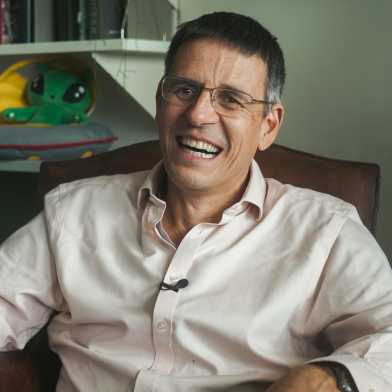
Thirty years ago, Swiss physicist Didier Queloz discovered the first planet outside our solar system, revolutionising astrophysics. What the discovery has brought him and why he still hasn’t had enough.
Daniel Möckli, how can Switzerland maintain its security and prosperity?

The demise of the rules-based international order is jeopardising Switzerland’s success model, says security expert Daniel Möckli. He believes the country faces difficult positioning issues.
Circular economy in the building sector

Demolition is not the only option: two ETH professors aim to give buildings and building materials a second life.
At home in both lecture and concert hall

How does he manage to balance two great passions? Bachelor’s degree student Milan Kühn opted to study mechanical engineering, but still devotes a lot of time to music. He explains why in the video.
Researchers use ultrasound holograms to influence brain networks

For the first time, a new ultrasound technique allows researchers to stimulate multiple locations in the brain simultaneously. This opens up new possibilities for treating devastating brain diseases such as Alzheimer’s, Parkinson’s and depression in the future.